
- All
- Product Name
- Product Keyword
- Product Model
- Product Summary
- Product Description
- Multi Field Search
Views: 0 Author: Site Editor Publish Time: 2026-06-10 Origin: Site


In today’s hyper-connected and technologically driven world, continuous electrical power is no longer a luxury; it is an absolute necessity. From life-saving medical equipment in hospitals to massive data centers that power the global internet, even a momentary lapse in electricity can lead to catastrophic consequences, including data loss, financial ruin, and compromised safety. To mitigate these risks, facilities rely heavily on backup generator power systems. However, a generator alone is not enough to guarantee seamless business continuity. The critical bridge between your primary utility power and your backup generator is a highly sophisticated piece of equipment known as the automatic transfer switch. Without this intelligent device, a backup power system is essentially useless during an unexpected blackout.
Navigating the complexities of backup power infrastructure can be daunting for facility managers, electrical contractors, and business owners. Choosing the right components requires a deep understanding of electrical loads, safety regulations, and operational requirements. This comprehensive guide is designed to demystify the selection process. We will explore the intricate workings, essential features, safety benefits, and critical selection criteria required to choose the optimal switching mechanism for your specific generator power system. Whether you are upgrading an aging facility or designing a state-of-the-art power architecture from the ground up, understanding how to properly specify and select this equipment is the most crucial step in ensuring your power never fails.
Before diving into the complex selection criteria, it is essential to establish a foundational understanding of what this equipment does and how it operates within the broader context of a generator power system. The fundamental purpose of this device is to safely and efficiently manage the flow of electricity from multiple sources to a critical load.
An Automatic Transfer Switch is an intelligent, microprocessor-controlled electrical device that continuously monitors the incoming primary power source (usually the utility grid). When it detects a power failure, unacceptable voltage sag, or frequency deviation, it automatically signals the backup generator to start. Once the generator reaches the correct speed and electrical output, the switch safely disconnects the facility from the dead utility line and connects it to the generator line, restoring power to the building. It acts as the "brain" of the emergency power system, requiring zero human intervention to execute complex electrical transitions under high-stress conditions.
The operational sequence of an Automatic Transfer Switch is a marvel of modern electrical engineering, designed with multiple fail-safes and precise timing mechanisms. The standard sequence of operations unfolds in the following highly regulated steps:
Continuous Monitoring: The controller constantly measures the voltage and frequency of the utility power.
Outage Detection and Verification: If the utility power drops below a predetermined threshold (e.g., 80% of nominal voltage), the switch initiates a brief time delay (usually 1 to 3 seconds). This delay prevents the system from reacting to momentary voltage dips or transient spikes, thereby avoiding unnecessary generator starts.
Engine Start Signal: Once the time delay expires and the outage is confirmed, the switch sends a low-voltage signal to the generator's engine control panel, commanding it to start.
Power Transfer: The generator spins up. Once the switch verifies that the generator is producing stable voltage and frequency, it mechanically breaks the connection to the utility grid and makes the connection to the generator. This "break-before-make" action ensures the two power sources never collide.
Utility Restoration Monitoring: While running on generator power, the switch continues to monitor the utility line. When utility power returns, the switch waits for a stabilization period (often 5 to 30 minutes) to ensure the grid is truly stable and not experiencing rolling blackouts.
Retransfer and Cooldown: After stabilization, the switch transfers the load back to the utility grid. It then allows the generator to run without a load for a cooldown period (typically 5 minutes) before sending the signal to shut down the engine, resetting the entire system for the next event.
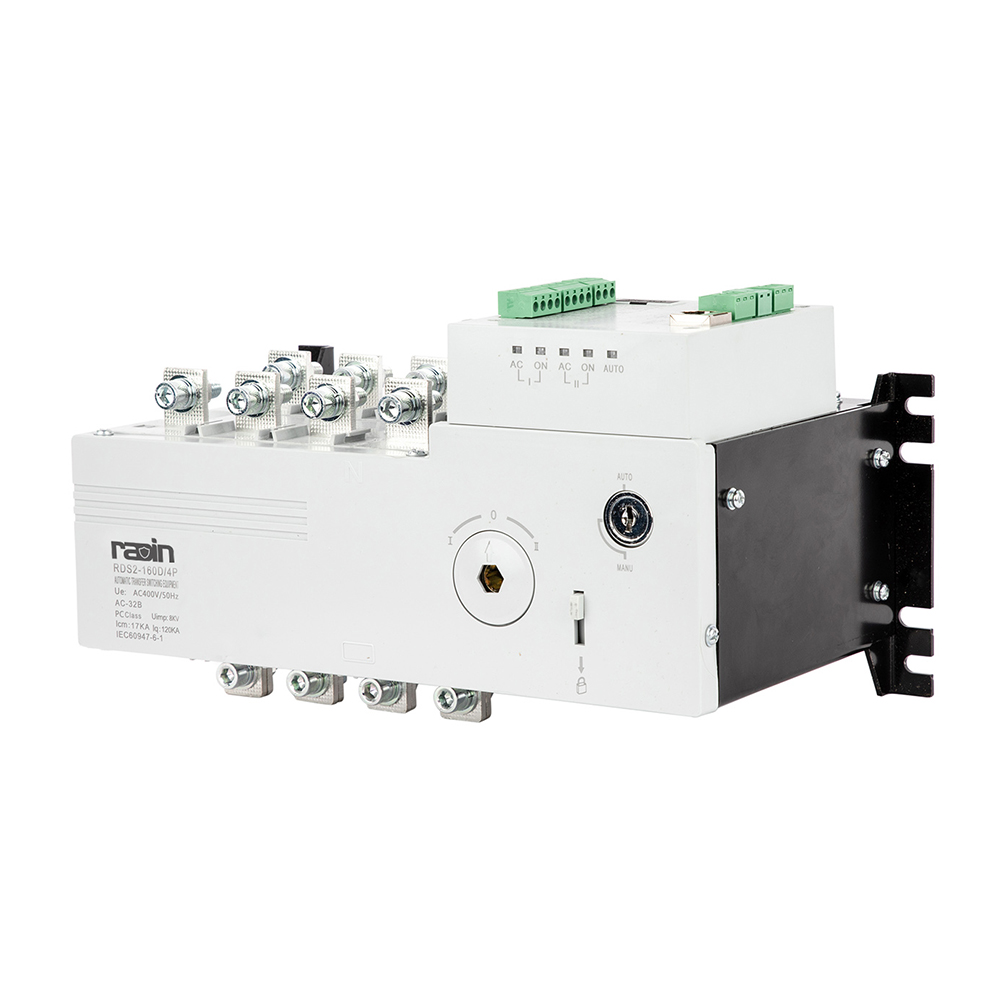
A high-performance Automatic Transfer Switch ensuring seamless power transition for critical infrastructure.
While manual transfer switches exist, they are entirely impractical for commercial, industrial, and critical residential applications. The integration of an automated system provides unparalleled benefits that go far beyond mere convenience.
The most critical function of an Automatic Transfer Switch is ensuring absolute electrical safety, specifically by preventing a dangerous phenomenon known as "backfeeding." If a generator is running and connected to a building's electrical panel without a proper transfer mechanism, the electricity produced by the generator can flow backward out of the building, through the utility meter, and into the local power grid. Because utility transformers step up voltage, the 240 volts from a generator can be amplified to thousands of volts on the street lines. This poses a lethal electrocution hazard to utility linemen working to restore power. By mechanically interlocking the utility and generator connections, the switch guarantees that the facility is isolated from the grid while the generator is running, ensuring compliance with the National Electrical Code (NEC) and protecting human lives.
In environments such as data centers, telecommunications hubs, and healthcare facilities, time is literally money—and sometimes life. An Automatic Transfer Switch minimizes downtime to mere seconds. Without it, facility personnel would have to navigate a dark building, locate the electrical room, manually disconnect the utility, start the generator, and manually throw a heavy switch. This manual process can take anywhere from 15 minutes to over an hour. An automated system eliminates human error, ensures immediate restoration of critical loads (like HVAC, security systems, and servers), and maintains the operational efficiency of the business regardless of external grid conditions.
Choosing the correct equipment is not a one-size-fits-all endeavor. Electrical engineers and facility managers must carefully evaluate several technical specifications to ensure the switch perfectly matches the generator, the utility service, and the specific needs of the building's electrical load.
The first and most critical step is determining the correct amperage and voltage ratings. The switch must be sized to handle the maximum continuous electrical load of the circuits it is backing up. For a "whole-house" or "whole-facility" setup, the switch's amperage rating must match or exceed the rating of the main utility service disconnect (e.g., a 400-amp service requires a 400-amp switch). Furthermore, the voltage configuration must precisely match the facility's electrical system. Common configurations include 120/240V single-phase for residential and light commercial applications, and 208V, 480V, or 600V three-phase systems for heavy industrial and commercial facilities. Selecting an undersized switch will lead to catastrophic overheating, tripped breakers, and potential fire hazards.
The method by which the switch moves the electrical load from one power source to another is known as the transition type. Understanding these types is vital for protecting sensitive equipment:
Open Transition (Break-Before-Make): This is the most common type. The switch completely disconnects from the utility before connecting to the generator. There is a brief interruption of power (typically a fraction of a second to a few seconds). It is highly reliable and suitable for most standard applications.
Delayed Transition (Programmed Transition): Similar to open transition, but the switch intentionally pauses in a "neutral" position (connected to neither utility nor generator) for a programmed amount of time. This is crucial for facilities with large mechanical loads, such as massive HVAC chillers or industrial motors. The delay allows the residual magnetic voltage in the spinning motors to decay, preventing massive electrical surges that could destroy the equipment when the new power source is connected.
Closed Transition (Make-Before-Break): Used in highly critical facilities like data centers, this switch momentarily connects to both the utility and the generator simultaneously (usually for less than 100 milliseconds) during the retransfer back to utility power. This ensures absolutely zero interruption of power to the load. However, it requires complex synchronization controllers to ensure the generator and utility are perfectly in phase before the connection is made, and it often requires special permission from the local utility company.
The physical environment where the switch will be installed dictates the required NEMA (National Electrical Manufacturers Association) enclosure rating. If the switch is installed indoors in a clean, dry electrical room, a NEMA 1 enclosure is sufficient. If it must be installed outdoors, exposed to rain, snow, and ice, a NEMA 3R enclosure is mandatory. For highly corrosive environments, such as coastal areas with salt spray or wastewater treatment plants, a NEMA 4X stainless steel enclosure is required to protect the sensitive internal electronics and contactors from rapid degradation.
When specifying equipment for commercial and industrial applications, you will frequently encounter two primary classifications of transfer mechanisms: CB Class and PC Class. Understanding the fundamental engineering differences between these two is critical for ensuring long-term reliability.
A CB (Circuit Breaker) Class switch utilizes two standard molded case circuit breakers equipped with motor operators to perform the transfer. While functional and capable of providing short-circuit protection, they are generally slower and have lower mechanical endurance.
Conversely, a PC Class switch is purpose-built specifically for transferring power. It utilizes a dedicated, mechanically held contactor mechanism. It does not have built-in overcurrent protection (which is instead handled by upstream breakers), allowing it to focus entirely on rapid, robust switching. PC Class switches boast significantly higher Short-Circuit Withstand and Closing Ratings (WCR), meaning they can survive massive electrical faults without welding their contacts shut. When upgrading your generator power system, investing in a high-quality Automatic Transfer Switch that utilizes PC-class architecture ensures maximum reliability, faster transfer times, and a lifespan that far exceeds standard circuit breaker-based alternatives. For mission-critical infrastructure, PC Class is universally recognized as the superior engineering choice.
The quality of the internal components, the sophistication of the microprocessor controller, and the overall reliability of the system are directly tied to the manufacturer you choose. Not all brands are created equal, and selecting a subpar manufacturer can lead to devastating failures during an emergency.
When evaluating potential suppliers, look for companies with a proven track record of innovation and rigorous quality control. A top-tier manufacturer will subject their products to extreme testing conditions to meet or exceed international standards such as UL 1008 (the gold standard for transfer switch safety and reliability) and IEC 60947-6-1. Partnering with an industry-leading Automatic Transfer Switch manufacturer guarantees that you receive not only a product but a comprehensive power solution. These manufacturers invest heavily in Research and Development (R&D), offering advanced features such as touchscreen interfaces, remote monitoring via cloud-based platforms, predictive maintenance alerts, and custom-engineered solutions tailored to unique facility layouts. Furthermore, a reputable manufacturer provides robust warranties and has a global network of certified technicians available for emergency support and commissioning.
Even the most advanced, expensive equipment will fail if it is improperly installed or neglected. Proper installation and rigorous maintenance are non-negotiable aspects of owning a backup power system.
Under no circumstances should this equipment be installed by an unlicensed individual or as a DIY project. The installation involves routing high-voltage cables, integrating complex low-voltage control wires between the switch and the generator, and ensuring strict compliance with local building codes and the National Electrical Code (NEC). A licensed commercial electrical contractor must perform the installation. They will ensure proper grounding, correct wire sizing to prevent voltage drop, and accurate programming of the microprocessor controller's time delays and voltage setpoints.
To ensure the system works flawlessly when a blackout strikes, a comprehensive preventative maintenance program is required, adhering to standards such as NFPA 110 (Standard for Emergency and Standby Power Systems). Key maintenance practices include:
Monthly Load Testing: The system should be tested at least once a month by simulating a utility failure. This forces the switch to transfer the actual building load to the generator, verifying that the contacts move smoothly and the generator can handle the real-world electrical demand.
Annual Visual and Mechanical Inspection: A certified technician should open the enclosure once a year to inspect for signs of overheating, loose connections, or arc tracking.
Infrared Thermography: Using a thermal imaging camera while the switch is under load can quickly identify loose lugs or degrading contacts that are generating excess heat, allowing for proactive repairs before a catastrophic failure occurs.
Cleaning and Lubrication: The interior of the enclosure must be vacuumed to remove dust and debris, which can cause electrical shorts. Moving mechanical parts should be lubricated according to the manufacturer's specifications.
Most commercial-grade models come equipped with a manual bypass or isolation feature. This allows trained personnel to mechanically bypass the automatic controls and manually transfer the load using a specialized handle. This feature is critical for performing maintenance on the switch without dropping power to the critical load, or in the extremely rare event of a microprocessor controller failure.
The physical transfer time (the time the contacts take to move from one position to another) is incredibly fast, often less than 50 milliseconds in PC Class switches. However, the total time from the moment the utility fails to the moment generator power is supplied to the building is typically between 10 to 15 seconds. This duration accounts for the programmed outage verification delay (1-3 seconds) and the time it takes for the heavy-duty diesel or gas generator engine to start, stabilize, and reach the proper voltage and frequency.
When properly sized, installed in the correct environment, and rigorously maintained according to manufacturer specifications, a high-quality PC Class switch can easily last 20 to 30 years. The microprocessor controllers may require upgrading or replacement after 10 to 15 years due to technological advancements, but the heavy-duty mechanical contactors are built for decades of reliable service.
Generally, no. While the switch protects against voltage sags and complete outages by starting the generator, it is not a Surge Protective Device (SPD). To protect sensitive electronics from lightning strikes or massive utility voltage spikes, dedicated SPDs must be installed at the main electrical panel or integrated directly into the transfer switch enclosure during the manufacturing process.
Securing your facility against the unpredictability of the utility grid requires more than just a powerful generator; it demands a highly reliable, intelligent switching mechanism. By selecting a premium, PC-Class Automatic Transfer Switch from a world-class manufacturer, you are investing in the ultimate insurance policy for your business continuity.
Summary of Core Product Advantages:
Uncompromising Safety: Complete mechanical interlocking prevents deadly backfeeding, protecting utility workers and facility staff.
Seamless Business Continuity: Rapid, automated detection and transfer eliminate costly downtime, protecting data, inventory, and critical operations.
Superior PC-Class Durability: Purpose-built mechanical contactors offer exceptionally high Short-Circuit Withstand Ratings (WCR), ensuring the switch survives severe electrical faults.
Intelligent Control Systems: Advanced microprocessors provide precise voltage and frequency monitoring, customizable time delays, and comprehensive remote monitoring capabilities.
Long-Term ROI: Robust construction, rigorous UL/IEC testing, and extended lifespans guarantee that your investment will protect your facility for decades to come.
Ultimately, an expertly manufactured and properly maintained transfer system operates silently in the background, providing peace of mind that when the grid fails, your power system will perform flawlessly, keeping your lights on and your operations running without missing a beat.