
- All
- Product Name
- Product Keyword
- Product Model
- Product Summary
- Product Description
- Multi Field Search
Views: 240 Author: Site Editor Publish Time: 2025-10-31 Origin: Site


In electrical power systems, safety, reliability, and maintenance efficiency are of utmost importance. An Isolator Switch is a crucial device that allows operators to safely disconnect a section of the electrical circuit for inspection, maintenance, or emergency purposes. Unlike automatic switches, an isolator requires manual operation to physically separate the power source from the load, providing a high level of safety during service.
This article explains how an Isolator Switch works, its components, types including Load Break Switches, and applications such as isolating electric circuits for safety maintenance. By understanding its functionality, users can ensure both operational safety and reliability in various power distribution systems.
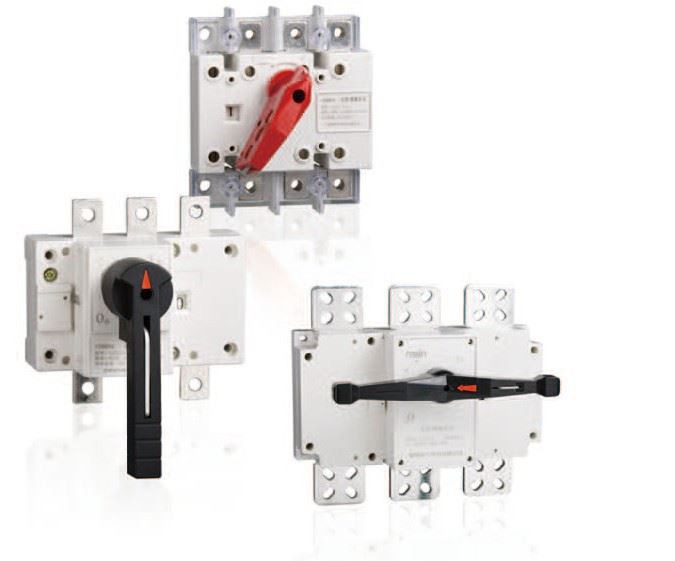
An Isolator Switch, also referred to as a disconnect switch, is a manual device used to disconnect electrical circuits from the main power supply. It ensures that a circuit is completely de-energized, allowing safe inspection or repair.
Key Features:
Reliable disconnection mechanism
Clear position indication (ON/OFF)
Mechanical locking to prevent accidental operation
High dielectric and protective properties
Applications:
Isolate electric circuits for safety maintenance
Emergency circuit disconnection
Integration with Load Break Switches in medium- and low-voltage systems
Key Specifications of RDGL Series Isolator Switches
| Feature | RDGL Series (63A–3150A) |
|---|---|
| Rated Voltage | AC 660V / DC 440V |
| Rated Current | 63A – 3150A |
| Poles | 3 poles / 4 poles (with on/off neutral) |
| Operation Mechanism | Spring-accumulating, accelerating instant-release |
| Casing Material | Glass fiber reinforced unsaturated polyester resin |
| Contact Material | Copper alloy plated with silver |
| Safety Features | Mechanical lock in “0” position, large insulation clearance |
| Standards | IEC 60947-1, IEC 60947-3, GB/T 14048.1, GB/T 14048.3 |
The Isolator Switch functions by physically separating electrical contacts to interrupt the current flow. Its operation ensures that the circuit is completely de-energized before any maintenance work begins.
The RDGL series uses a spring-accumulating, accelerating instant-release device, allowing rapid making and breaking of double-gap contacts. Key advantages:
Arc extinguishing capability independent of handle speed
Instantaneous disconnection enhances safety
Self-cleaning function on contacts for long-term reliability
ON/OFF Position Window: Clearly indicates the state of the switch
Mechanical Locking: In the “0” (OFF) position, the handle can be locked in three positions to prevent accidental operation
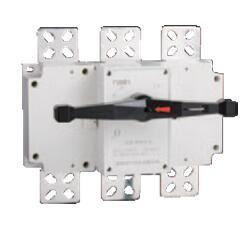
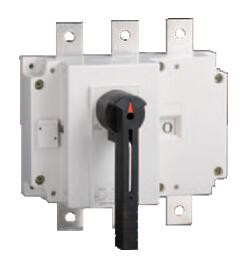
The RDGL series adopts a modular design, allowing flexible installation and easier maintenance. This design ensures high dielectric strength and resistance to environmental conditions.
The glass fiber reinforced unsaturated polyester resin casing provides:
Flame resistance
High impact resistance
Dielectric insulation for safe operation
Copper Alloy Contacts Plated with Silver: Provides excellent conductivity and longevity
Parallel Double Gap Contact: Self-cleaning action improves reliability and reduces maintenance
Optional auxiliary contacts for control circuits
Cable insulating covers for enhanced safety
Compatibility with side or back operation mechanisms
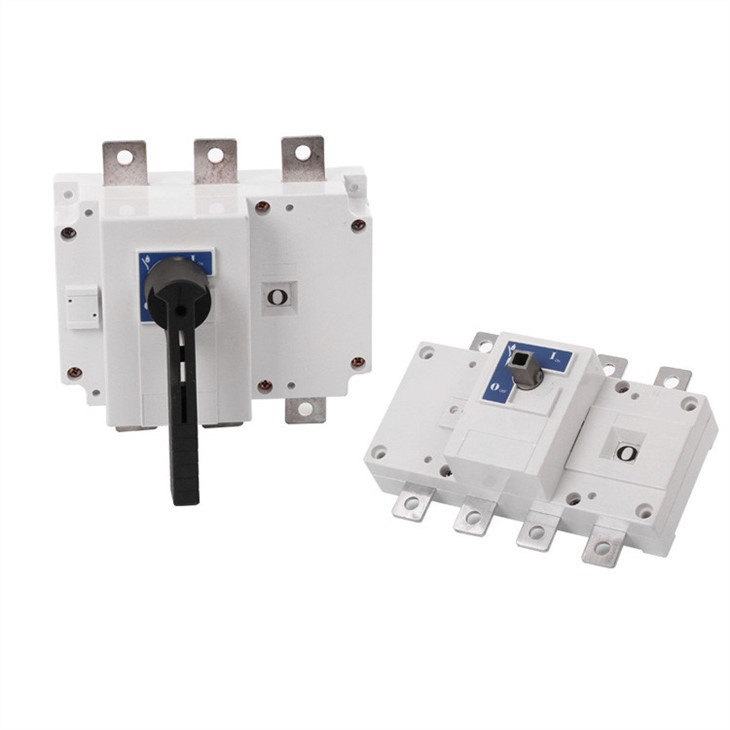
A Load Break Switch is a type of isolator switch capable of switching under load conditions. Features include:
Safe operation under rated current
Rapid arc extinguishing mechanism
Suitable for switching and isolation in medium-voltage applications
Used primarily for circuit isolation
Cannot switch under load
Ensures complete disconnection for safety maintenance
Isolator Switch Types Comparison
| Feature | Standard Isolator | Load Break Switch |
|---|---|---|
| Can switch under load? | No | Yes |
| Arc Extinguishing | Mechanical contacts only | Spring-accumulating instant-release |
| Safety Lock | Yes | Yes |
| Typical Application | Maintenance isolation | Circuit switching & emergency isolation |
| Rated Current Range | 63A–1000A | 100A–3150A |
One of the primary applications of an Isolator Switch is to safely isolate a circuit during inspection or maintenance. This prevents accidental energization, protecting both personnel and equipment.
During fault conditions or emergencies, isolator switches provide a manual method to quickly disconnect circuits, reducing the risk of fire or damage.
In complex power distribution networks, Load Break Switches and isolators work together to:
Enable safe switching under load
Facilitate routine maintenance without shutting down the entire system
Provide enhanced flexibility in industrial and commercial environments
Provides safe disconnection for maintenance and inspection
Mechanically simple and highly reliable
Rapid switching with spring-accumulating mechanism
High dielectric casing ensures operator safety
Flexible modular design for various installation needs
Can integrate with Load Break Switches for complex applications
Advantages Overview
| Advantage | Description |
|---|---|
| Safety | Prevents accidental energization during maintenance |
| Reliability | Spring-accumulating contacts ensure long-term operation |
| Flexibility | Modular design allows installation in multiple configurations |
| Durability | Fiberglass-reinforced casing withstands harsh conditions |
| Easy Operation | Clear position indicators and mechanical lock |
| Compliance | Meets IEC and GB standards |
Always consult a qualified electrician for installation.
Verify the rated voltage and current match the application.
Ensure proper clearance around the switch for operation.
Check mechanical interlocks before energizing.
Maintain a log of periodic inspections and tests.
Avoid operation under adverse environmental conditions outside the specified range (-5°C to +40°C).
Inspect contacts for corrosion or wear every 6–12 months
Test the mechanical operation mechanism to ensure rapid response
Clean the casing and ensure auxiliary contacts function correctly
Replace damaged parts immediately to maintain operational safety
Lubricate moving parts if specified by the manufacturer
Q1: What is an isolator switch?
A: An isolator switch is a manual device used to disconnect electrical circuits for safety maintenance or emergency situations.
Q2: How is a Load Break Switch different from a standard isolator?
A: Load Break Switches can switch circuits under load, while standard isolators are intended only for de-energized circuits.
Q3: Can isolator switches be used with generators?
A: Yes, they can safely disconnect circuits during generator operation or for manual generator changeover.
Q4: What safety features are included in RDGL series switches?
A: Mechanical locks, spring-accumulating instant-release contacts, fiberglass-reinforced casing, and clear position indicators.
Q5: What are the typical applications of isolator switches?
A: Maintenance isolation, emergency circuit disconnection, and integration with Load Break Switches in power distribution networks.
Q6: How often should isolator switches be maintained?
A: Contacts and mechanisms should be inspected and tested every 6–12 months, depending on usage conditions.