
- All
- Product Name
- Product Keyword
- Product Model
- Product Summary
- Product Description
- Multi Field Search
Views: 0 Author: Site Editor Publish Time: 2025-11-19 Origin: Site


Isolator switches play a crucial role in electrical systems, ensuring safety during maintenance. But can an isolator switch trip itself during fault conditions?
This article will explore whether an isolator switch can trip or if that responsibility falls to other devices, such as a load breaker switch.
An isolator switch, also known as a disconnector, is a manual device used to ensure that a circuit is completely disconnected from its power source. Unlike circuit breakers, which automatically respond to fault conditions, an isolator switch requires manual operation to open or close a circuit. It physically separates the electrical contacts, creating a clear gap that ensures no power can flow, making it safe for workers to perform maintenance.
Isolator switches do not operate under fault conditions or interrupt power during overloads, making them fundamentally different from load breaker switches and circuit breakers, which are designed for such tasks.
● Manual Operation: Isolator switches are designed to be operated manually, providing physical assurance that the circuit is off and de-energized.
● Visible Isolation: The switch creates a visible air gap between contacts, ensuring that the isolation of the circuit is easily visible and verifiable.
● No Arc Suppression: Isolator switches do not have mechanisms to suppress arcing when opening under load, which is why they should only be used when no current is flowing.
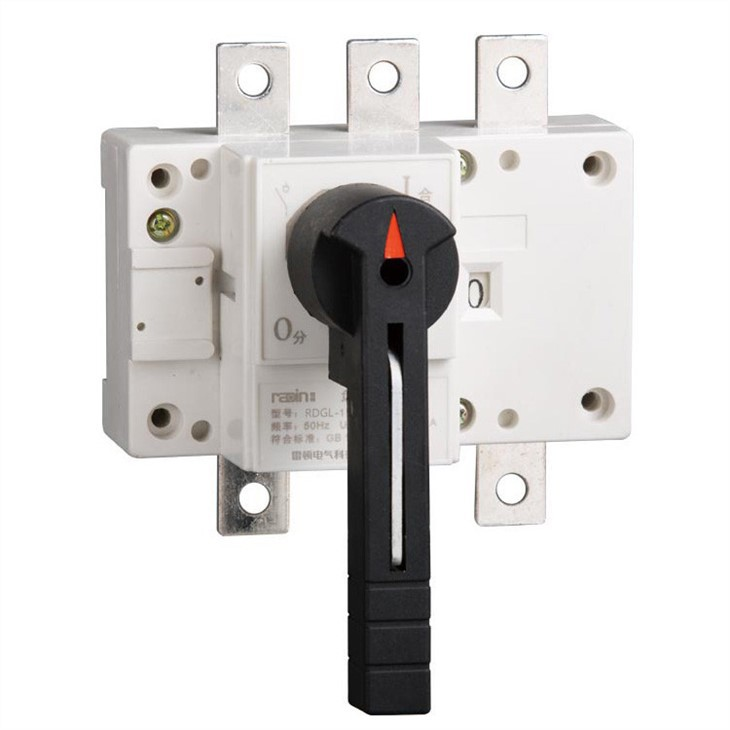
An isolator switch does not have the capability to trip itself. Its sole function is to disconnect power from a circuit, but it cannot react to fault conditions, such as overloads or short circuits. The design of the isolator switch is focused on creating a secure, visible separation to allow for safe maintenance, not on fault protection.
This key distinction is important in understanding why isolators cannot trip under fault conditions. They do not have the internal mechanisms, such as thermal or magnetic trip units, that load breaker switches or circuit breakers possess.
Unlike a circuit breaker or load breaker switch, an isolator switch is not an automatic safety device. It relies on human intervention to ensure the circuit is de-energized. This makes it crucial for maintenance but not for immediate protection during faults.
● No Fault Detection Mechanism: Isolators lack the components needed to detect faults, such as overcurrent, short circuits, or ground faults. These functions are specifically handled by load breaker switches or circuit breakers.
● Risk of Damage Under Load: Operating an isolator switch while the circuit is under load can lead to dangerous arcing, damaging the switch and potentially causing fires. This is why isolators must always be used when the circuit is de-energized.
A load breaker switch is designed to interrupt current even when the circuit is carrying load. Unlike isolator switches, which require manual operation and only work when the circuit is de-energized, load breaker switches are automatically operated and can safely interrupt power during fault conditions, such as overloads or short circuits.
● Isolator Switch: Primarily used for isolation when there is no load current, ensuring that a section of the system is completely powered off for maintenance or safety. It is a manual device that provides a visible and safe disconnection.
● Load Breaker Switch: A load breaker switch can operate under load, meaning it can disconnect power even when current is flowing. This is critical for protecting circuits during fault conditions, as it can immediately cut off power to prevent further damage or hazards.
● Why a Load Breaker Switch is Essential: Load breaker switches are an integral part of electrical systems because they provide immediate protection against electrical faults, such as overcurrent or short circuits. Isolator switches, on the other hand, only serve to disconnect power for maintenance purposes and do not protect against faults.
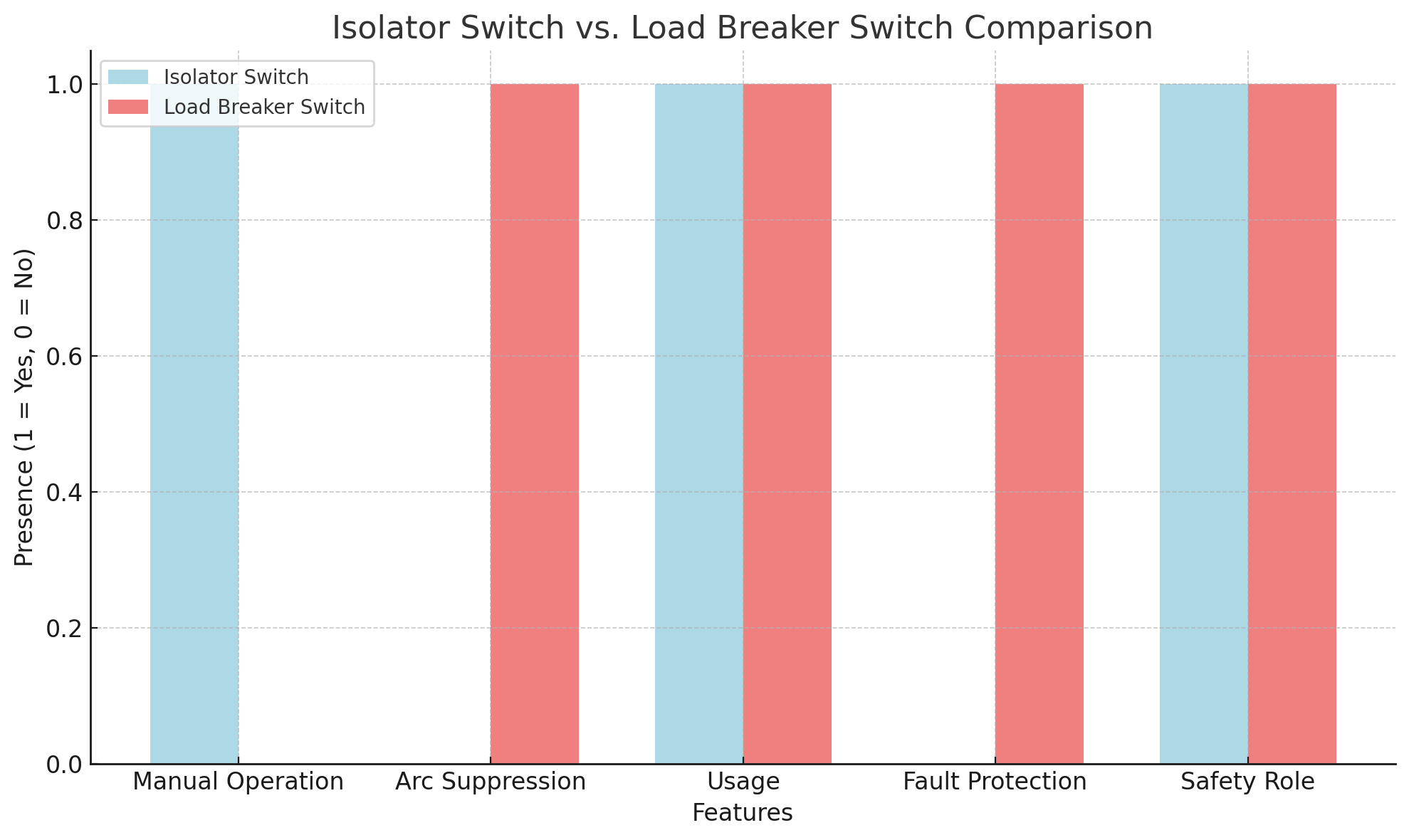
Feature | Isolator Switch | Load Breaker Switch |
Function | Isolates circuits for maintenance | Interrupts current during faults |
Operation | Manual operation | Automatic operation |
Arc Suppression | No arc suppression | Has arc suppression for fault conditions |
Usage | For maintenance when no current flows | For fault protection during overloads or short circuits |
Safety Role | Ensures complete disconnection for safety | Automatically trips when faults occur |
Operating an isolator switch under load can lead to dangerous consequences:
● Arcing: Since isolators lack arc suppression technology, attempting to open an isolator switch under load can cause severe arcing. This can damage the switch, create fires, and endanger personnel.
● System Damage: Operating an isolator improperly, especially under fault conditions, can cause significant damage to the electrical system, resulting in costly repairs and potential safety hazards.
● Ensure the Circuit is De-energized: Always verify that no current is flowing through the circuit before operating the isolator. This ensures safety and prevents damage to the switch.
● Use in Conjunction with Other Safety Devices: Isolators should be used in combination with circuit breakers or load breaker switches to ensure complete protection during both operation and maintenance.
Risk | Description |
Arcing | Opening an isolator switch under load causes dangerous arcing, damaging the switch. |
System Damage | Incorrect operation can lead to significant electrical system damage. |
Fire Hazard | Persistent arcing can result in fire risks, especially in systems with flammable materials. |
Isolator switches provide a visible and safe means to disconnect power during maintenance, ensuring that workers are not exposed to live electrical circuits. The ability to see the visible air gap between contacts confirms that no current can flow, which is vital when working with electrical systems.
● Complementing Circuit Breakers: While circuit breakers are essential for protecting against electrical faults, isolator switches provide a crucial second layer of safety during maintenance. The combination of the two ensures that the system is both protected during operation and safe for workers during maintenance.
● Complete Isolation for Safe Maintenance: A circuit breaker alone cannot guarantee complete isolation, which is why isolators are necessary for safely working on electrical systems. The clear isolation provided by an isolator switch ensures that maintenance personnel are protected from accidental electrocution.
Step | Description |
1. Always De-energize Before Use | Ensure no current is flowing before operating the isolator switch. |
2. Verify Circuit De-energized | Double-check that the circuit is fully de-energized before isolating. |
3. Lockout/Tagout Procedures | Lock the isolator switch in the "off" position to prevent accidental reconnection. |
4. Follow Correct Sequence | Always open the circuit breaker first, then the isolator switch for safety. |
In summary, isolator switches cannot trip themselves as they are not designed to protect circuits from faults. Instead, they isolate electrical systems to ensure safe maintenance. Isolators must be used with load breaker switches or circuit breakers to handle fault conditions. Best practices include always de-energizing before use and understanding the difference between isolators and load breaker switches. Radin Electric offers high-quality isolation solutions to enhance safety in electrical systems, ensuring that circuits are properly isolated and protected during maintenance.
A: No, an isolator switch cannot trip itself. It is designed solely for isolating circuits during maintenance and does not handle faults like overloads or short circuits. For fault protection, a load breaker switch is required.
A: An isolator switch manually disconnects a circuit to ensure safety during maintenance. It creates a visible gap between contacts to ensure the circuit is de-energized before work can begin.
A: An isolator switch is for isolation and requires manual operation when no current is flowing, while a load breaker switch can interrupt power under load during fault conditions.
A: Isolator switches are not equipped to detect or interrupt faults. They only isolate circuits for maintenance, whereas circuit breakers automatically trip when faults like overloads occur.
A: An isolator switch should be used when de-energizing circuits for safe maintenance, ensuring no current flows during repair work. It should only be operated when no load current is present.
A: No, isolator switches are not designed for fault protection. For protection during faults, a load breaker switch or circuit breaker should be used in conjunction with the isolator switch.