
- All
- Product Name
- Product Keyword
- Product Model
- Product Summary
- Product Description
- Multi Field Search
Views: 0 Author: Site Editor Publish Time: 2026-05-12 Origin: Site


Unplanned power interruptions carry severe operational and financial consequences in today's high-demand environments. Every minute of sudden downtime degrades critical assets and heavily impacts your bottom-line revenues. Modern facilities simply cannot afford to rely on outdated power transition protocols.
Manual power transfer processes introduce critical delays when utility grid failures occur. They also drastically increase arc flash exposure risks for maintenance personnel on the ground. Furthermore, these older legacy systems completely lack the real-time visibility necessary for rapid decision-making.
Upgrading to a modern Remote Transfer Switch bridges the gap between basic infrastructure resilience and advanced facility management. This comprehensive guide provides facility managers and electrical engineers with a clear, evidence-based framework. You will learn exactly how to evaluate, shortlist, and securely implement remote power transfer solutions.
Remote transfer capabilities prioritize personnel safety by removing operators from the immediate arc flash boundary during power transitions.
Selecting the right switch requires balancing transition type (open vs. closed) with facility-specific load requirements and compliance standards (UL 1008, NFPA 110).
Integration with existing Building Management Systems (BMS) or SCADA networks is a primary driver of long-term ROI, enabling predictive maintenance and centralized telemetry.
Successful implementation relies heavily on meticulous cutover planning and assessing the physical constraints of legacy switchgear environments.
Facility managers constantly look for ways to improve infrastructure reliability. Moving away from manual switches offers significant operational advantages. We must examine the core benefits driving this transition.
Operator safety is the most critical factor in electrical management. Manual overrides require personnel to stand directly in front of high-voltage equipment. This proximity creates severe arc flash hazards during testing cycles. Remote operations distance your team from the immediate danger zone. You can easily comply with strict safety protocols while protecting human lives.
Grid failures demand immediate responses. You cannot waste precious minutes waiting for an operator to physically reach the switchgear room. Remote units minimize the time between a grid failure and generator load acceptance. They guarantee operational continuity without requiring physical, on-site intervention.
Legacy systems operate in the dark. Operators rarely know the exact status of a manual switch until they inspect it. Centralized visibility changes this dynamic completely. You gain the distinct operational advantage of monitoring voltage, frequency, and switch position. Your team can track these metrics from a remote control room or a centralized digital dashboard.
Regulatory bodies and insurance providers require meticulous records. Managing paper logs for monthly generator tests is highly inefficient. Modern systems automate the logging of all testing cycles and power events. They effortlessly satisfy regulatory reporting requirements and simplify your annual audits.
Best Practice: Always schedule automated test logs to export directly to your compliance officer's inbox. This ensures you never miss a mandatory NFPA 110 reporting deadline.
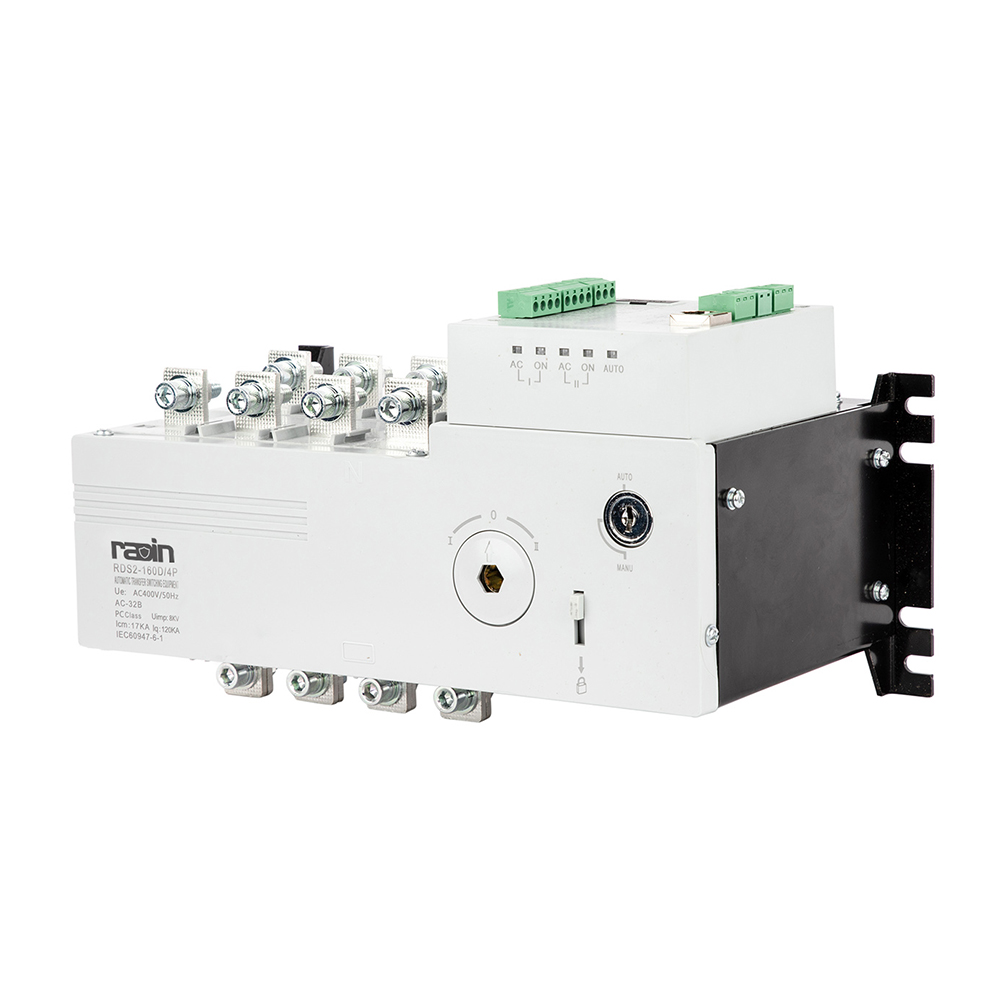
Selecting a Remote Transfer Switch for Commercial applications requires understanding your specific load types. Manufacturers categorize these devices based on transition mechanisms, mechanical designs, and control architectures. You must match the hardware to your facility's operational profile.
The transition type dictates how the switch handles the brief moment between power sources. Your choice depends heavily on how sensitive your connected loads are to momentary outages.
Open-Transition (Break-before-make): This is the standard, cost-effective solution. The switch breaks the connection to the grid before connecting to the generator. A brief power interruption occurs. Use this model where a momentary outage is highly acceptable.
Closed-Transition (Make-before-break): This model provides a completely seamless transfer. It synchronizes the grid and backup power before making the switch. Critical loads in data centers and healthcare facilities demand this technology to prevent data loss.
The mechanical heart of the unit determines its speed and endurance. We typically see two primary internal designs.
Contactor-based units offer exceptionally fast transfer speeds. They are generally more compact. These units prove highly reliable for standard commercial applications. Conversely, circuit breaker-based designs handle much heavier duty cycles. They offer integrated overcurrent protection. Industrial facilities usually prefer breaker-based models for large-scale setups.
Mechanism Type | Key Advantage | Ideal Application |
|---|---|---|
Contactor-Based | Faster transfer speeds, compact footprint | Standard commercial buildings, retail |
Circuit Breaker-Based | Integrated overcurrent protection, durable | Heavy industrial, manufacturing plants |
You must decide how your operators will communicate with the device. Some facilities rely on hardwired remote annunciator panels. These hardwired systems are highly secure but lack advanced analytics. Alternatively, IP-enabled smart controllers leverage IoT connectivity. They offer rich data streams but require stringent network security measures.
Industrial environments push electrical hardware to its limits. You cannot evaluate a Remote Transfer Switch solely on its base price. You must analyze specific engineering dimensions to ensure long-term reliability.
Modern facilities rely on Building Management Systems (BMS) to orchestrate operations. Your new switch must speak the same language as your existing software network. You need to evaluate standard communication protocols carefully. Modbus, BACnet, and SNMP represent the most common integration pathways. Seamless integration enables predictive maintenance alerts and highly centralized telemetry.
You must strictly adhere to industry safety standards to pass inspections. First, ensure the unit meets UL 1008 standards specifically for transfer switch equipment. Second, verify the Withstand and Closing Ratings (WCR). The WCR must safely align with the available fault current at your facility. Ignoring these ratings can lead to catastrophic hardware failures during short circuits.
Common Mistake: Failing to calculate the available fault current before specifying the WCR. A switch rated lower than the fault current may literally explode during a severe electrical event.
Exposing power infrastructure to local networks introduces significant vulnerabilities. Cloud dashboards provide excellent visibility but invite external threats. You must aggressively assess network vulnerabilities. Evaluate your vendor's security protocols thoroughly. Demand strong data encryption, a frequent firmware update cadence, and strict role-based access control.
The physical environment dictates your enclosure choice. You must match National Electrical Manufacturers Association (NEMA) ratings to your operational reality. Placing the wrong enclosure in a harsh environment guarantees premature failure.
Enclosure Summary Chart | ||
NEMA Rating | Environmental Protection Level | Common Deployment Area |
|---|---|---|
NEMA 1 | Basic protection against falling dirt | Clean, indoor electrical rooms |
NEMA 3R | Protection against rain, sleet, and snow | Standard outdoor installations |
NEMA 4X | Corrosion resistance, watertight seal | Coastal areas, chemical washdown zones |
Procuring the hardware is only the first step. The true challenge lies in field implementation. You will face distinct engineering hurdles when integrating new technology into established power grids.
Retrofitting remote capabilities onto older, manually operated switchgear presents massive challenges. Legacy panels rarely feature the necessary mounting brackets or control wiring pathways. Furthermore, you must address physical footprint limitations. Existing electrical rooms are often highly cramped. Finding adequate wall space for new smart controllers requires creative engineering.
Swapping major electrical components requires facility downtime. You must plan the cutover window with extreme precision. The process involves physical installation, cable termination, and initial software commissioning. You can mitigate operational disruptions by following a phased approach.
Audit the facility loads to identify non-critical circuits.
Deploy temporary mobile generation to support critical operations during the outage.
Execute a phased cutover to limit total facility downtime.
Perform preliminary offline tests before reconnecting the main utility feeds.
Never hand over a system without rigorous Site Acceptance Testing. The SAT phase proves the equipment works exactly as engineered. You must simulate various failure modes before full operational handover. Test the loss of a single phase, total grid failure, and generator startup delays. Most importantly, verify the remote network latency. Slow control responsiveness can ruin a seamless closed-transition transfer.
You have reviewed the technical specifications and implementation risks. Now, you must narrow down your hardware choices. A systematic shortlisting process prevents costly procurement errors.
You cannot approach a vendor without exact electrical parameters. Audit your facility loads thoroughly. Specify the exact amperage, voltage requirements, and phase configurations. Identify whether your loads are highly inductive (like heavy motors) or primarily resistive. Accurate load profiling prevents undersized equipment failures.
Hardware quality is essential, but the surrounding support ecosystem is equally vital. Prioritize manufacturers offering robust local service networks. You want technicians available nearby when emergencies strike. Furthermore, assess the vendor's proven supply chain reliability for replacement parts. Comprehensive technical support ensures your Remote Transfer Switch operates smoothly for decades.
Do not rely on verbal estimates. Draft a preliminary single-line diagram of your intended integration. This diagram gives vendors a clear picture of your electrical topography. Request detailed technical submittals from two to three shortlisted manufacturers. Compare their WCR ratings, enclosure options, and software capabilities side-by-side. Engage your internal IT department early to review the cybersecurity protocols of any proposed IP-connected systems.
Modernizing your commercial or industrial power resilience is no longer optional. Implementing a remote power transfer solution provides immense strategic value. It drastically improves personnel safety, guarantees operational continuity, and centralizes your facility data.
Remember, proper engineering specification is just as critical as the hardware itself. You must carefully balance transition types, mechanical mechanisms, and cybersecurity protocols. Rigorous implementation planning ensures you maximize your infrastructure investment.
Take action today to protect your facility from the next unexpected outage. Contact a qualified electrical systems integrator. Ask them to conduct a comprehensive facility power audit and begin the formal specification process.
A: Yes, you can sometimes retrofit aftermarket motor operators onto existing manual switches. However, this approach is often unreliable and may void original UL certifications. Replacing the legacy unit with a factory-built remote switch provides far better compliance, faster transfer speeds, and integrated digital telemetry.
A: You should perform a comprehensive inspection annually. This routine must include thermal imaging to detect loose connections. It also requires a thorough visual contact inspection. Finally, you must conduct simulated remote transfers to verify network latency and mechanical responsiveness.
A: An ATS automatically transfers the load based on internal voltage sensing logic without human input. A remote switch specifically allows operators to initiate transfers and monitor metrics from a distant location. Many modern, high-end units actually combine both capabilities into a single smart controller.