
- All
- Product Name
- Product Keyword
- Product Model
- Product Summary
- Product Description
- Multi Field Search
Views: 0 Author: Site Editor Publish Time: 2026-05-18 Origin: Site


Switchgear failures in primary distribution networks cause severe safety hazards. Unplanned downtime also cripples facility operations. To prevent these catastrophic events, we must move beyond superficial maintenance checklists. Facilities need to accurately diagnose root technical failures. You must evaluate existing equipment limits and establish strict upgrade criteria.
Addressing equipment reliability is not merely an operational metric. It represents a critical life-safety mandate. It also ensures strict IEEE and IEC compliance. Standard visual checks often miss underlying mechanical degradation or micro-level insulation breakdowns. In this guide, you will learn how to identify common failure modes. We will explore rigorous troubleshooting protocols to secure your electrical infrastructure.
Most load break switch failures stem from mechanical fatigue (springs/linkages) or environmental degradation (insulation tracking/corrosion), not just electrical overloading.
"False isolation" (where the operating handle actuates but contacts remain closed) represents a critical design flaw in legacy units.
Standardized troubleshooting requires a three-tier approach: visual inspection, micro-ohm electrical testing (< 1 ohm contact resistance), and thermal imaging under load.
Upgrading to modern solid-dielectric designs with visible isolation gaps effectively neutralizes the primary failure modes of older air-break or SF6 units.
Understanding switchgear failure requires separating mechanical degradation from electrical breakdown. Both systems interact closely. However, they fail under different operational stresses.
Mechanical assemblies endure immense physical stress during operation. Over time, these components degrade and compromise system safety.
Operating Mechanism Fatigue: Frequent operation degrades internal components. Spring fatigue reduces the stored energy required for rapid contact separation. Deformed handles and linkage jamming often occur due to poor lubrication.
Transmission Wear: Moving parts experience friction. Worn gears or sheared pivot pins compromise actuation speed. A slow actuation speed directly reduces the arc-quenching capability of the unit.
Contact System Misalignment: Switch contacts require precise alignment. Insufficient contact spring pressure leads to excessive arcing. This sustained electrical arc melts and vaporizes contact material. The degraded surface subsequently increases electrical resistance.
Electrical failures usually develop silently. They manifest as heat anomalies or microscopic material breakdowns before causing a complete outage.
Thermal cycling causes metals to expand and contract continually. This movement loosens terminal bolts over time. Loose connections create high-resistance paths. These paths accelerate localized overheating, eventually melting adjacent insulation materials. You must address high-resistance connections before they trigger a fire.
Environmental factors destroy insulator integrity. Dust, ambient moisture, and salt-fog in coastal regions settle on component surfaces. These contaminants create unwanted conductive paths. This phenomenon reduces necessary creepage and clearance distances, ultimately leading to surface tracking or explosive flashovers.
Vacuum interrupter (bottle) failures represent another hidden risk. A modern Load Break Switch often relies on vacuum integrity to safely interrupt current. Micro-level failures occur when compromised seals allow moisture ingress. This destroys the internal vacuum. Without this vacuum, the switch cannot extinguish arcs safely during load interruption.
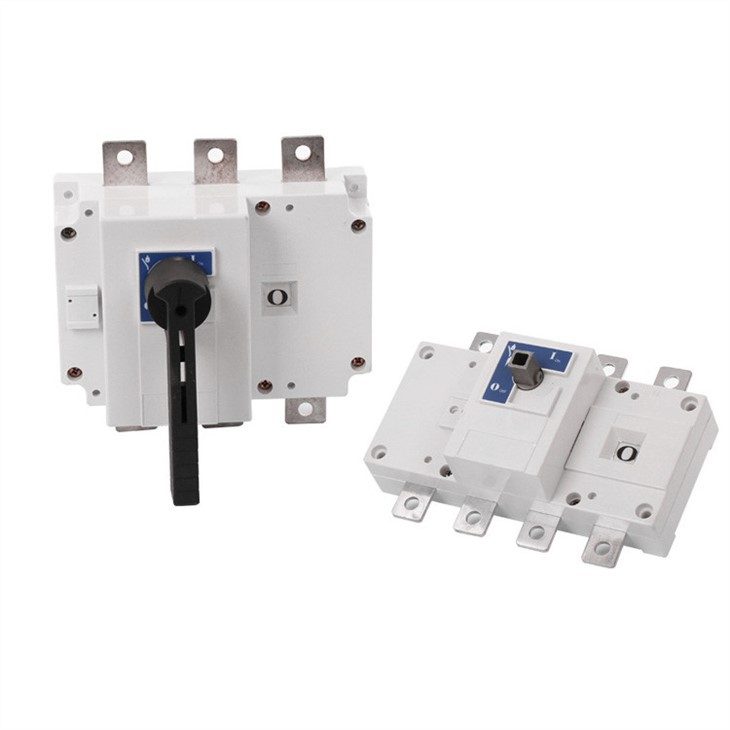
Legacy switchgear presents a unique and deadly hazard known as false isolation. This occurs due to architectural flaws in outdated mechanical interlocks. Documented industry case studies reveal scenarios where a switch mechanically feels "open." The operator actuates the handle, and the internal spring discharges normally. However, the internal contacts remain fused together or mechanically stuck.
This architectural flaw introduces severe safety protocol blindspots. Maintenance teams rely heavily on external handle position indicators. Relying solely on these external indicators introduces lethal risks during Lockout/Tagout (LOTO) procedures. If a technician assumes the circuit is dead without seeing visible isolator gaps or performing voltage verification, they face extreme electrocution danger.
Facility managers must apply a strict evaluation lens to their infrastructure. You should aggressively audit legacy oil-filled or enclosed switches for these specific mechanical disconnect vulnerabilities. Identify units lacking modern fail-safes. Plan to replace them to protect your personnel.
Reactive maintenance guarantees eventual failure. Facilities must adopt preventative Standard Operating Procedures (SOPs) based on objective data.
Standardized troubleshooting relies on a three-tier approach. Implement this framework to catch failures early.
Diagnostic Step | Tool / Methodology | Target Metric & Action |
|---|---|---|
1. Non-Destructive Thermal Imaging | Infrared (IR) Scanner | Detect hotspots caused by phase imbalances or degraded contacts before taking the system offline. |
2. Micro-Ohm & Insulation Testing | Megohmmeter & Low-Resistance Ohmmeter | Ensure insulation integrity. Contact resistance must remain strictly under 1 ohm. |
3. Physical Inspection & Servicing | Visual & Tactile Assessment | Check for polymer embrittlement, ceramic micro-cracks, and arc-chute wear. |
Incorrect maintenance causes as much damage as neglect. We must caution against improper lubrication practices. Technicians sometimes apply graphite or molybdenum disulfide directly to electrical contacts. This is a critical error. These compounds inadvertently increase electrical resistance. They generate excessive heat under load. Always specify specialized, non-resistive dielectric lubricants approved by the manufacturer for high-voltage contact surfaces.
Engineers often misapply equipment by misunderstanding functional boundaries. You must clarify these boundaries to ensure grid stability.
A basic Load Break Switch is designed exclusively for nominal load current switching. It acts as an isolation point. It explicitly lacks the automatic fault-sensing intelligence of a Circuit Breaker. It also lacks time-current trip curves. Expecting a switch to perform breaker duties invites catastrophic failure during a short circuit.
Procurement teams must identify true load-break ratings. Prevent specifying standard disconnectors or safety switches by mistake. Ensure the equipment nameplate explicitly lists "HP (Horsepower)" ratings. Alternatively, look for specific locked-rotor current capabilities defined by UL standards. Standard amps-only ratings do not guarantee safe load interruption under dynamic motor loads.
Because switches cannot clear heavy faults independently, fusing integration becomes mandatory. You must pair the switch with properly coordinated current-limiting fuses. These fuses safely manage and interrupt massive short-circuit fault currents before the thermal limits of the switchgear are exceeded.
Feature | Load Break Switch (LBS) | Circuit Breaker (CB) |
|---|---|---|
Primary Function | Isolates routine loads and normal currents. | Detects faults and safely interrupts abnormal currents. |
Fault Protection | Requires external current-limiting fuses. | Built-in automatic fault-sensing and trip units. |
Interrupting Capacity | Limited to nominal rated load current. | Can interrupt massive short-circuit fault currents. |
Grid modernization requires transitioning away from hazardous legacy technologies. Facilities are aggressively moving away from air and SF6 gas insulation. Air-break switches remain highly vulnerable to corrosion, dust, and wildlife interference. SF6 gas units offer excellent insulation but face heavy environmental regulation due to extreme greenhouse gas properties. The industry now favors solid-dielectric (epoxy and polymer) insulation technologies.
When selecting new equipment, prioritize designing for verifiable safety. An elite Load Break Switch manufacturer engineers visible isolation gaps directly into their enclosed switchgear. This design choice provides absolute visual confirmation to operators. It directly neutralizes the false-isolation hazard prevalent in older enclosed designs.
Establish strict vendor vetting criteria before procurement. Evaluate your supplier using these key benchmarks:
Assess the manufacturer's strict compliance with IEC 62271-103 standards. This guarantees high Basic Insulation Level (BIL) withstand capabilities.
Look for transparency regarding mechanical endurance ratings. Demand guaranteed lifecycle operating cycles before major overhauls become necessary.
Demand rigorous Factory Acceptance Testing (FAT) documentation. Verify specific environmental sealing capabilities, such as appropriate NEMA or IP ratings for your deployment conditions.
Partnering with a specialized Load Break Switch manufacturer ensures you receive equipment tailored to modern safety standards and harsh operational environments.
Recurring switchgear issues are rarely isolated anomalies. They are usually symptoms of misapplied equipment, harsh operating environments, or deferred maintenance schedules. Relying on outdated technology exposes your facility to dangerous false isolation events and unpredictable mechanical fatigue.
Facility decision-makers must take immediate action. We recommend conducting a facility-wide thermal and resistance audit of all aging switchgear. Document mechanical wear and baseline contact resistance immediately. Finally, partner with specialized manufacturers to phase out high-risk legacy units. Adopt solid-dielectric alternatives featuring visible isolation gaps to permanently elevate your electrical safety baseline.
A: Check the equipment nameplate for a Horsepower (HP) rating and specific UL or IEC load-break certifications. Standard amps-only ratings do not guarantee safe load interruption. Only HP or specific locked-rotor current ratings prove the device can handle dynamic operational loads safely.
A: Industry best practices dictate that contact resistance should consistently measure below 1 ohm using a precise micro-ohmmeter. Readings above this threshold indicate severe contact degradation, misalignment, or surface oxidation. This will lead to localized overheating and potential failure under load.
A: No. An LBS can isolate routine loads but lacks automatic fault-sensing intelligence. It does not possess the capacity to interrupt massive short-circuit currents on its own. You must pair the switch with coordinated current-limiting fuses to handle severe electrical faults safely.