
- All
- Product Name
- Product Keyword
- Product Model
- Product Summary
- Product Description
- Multi Field Search
Views: 0 Author: Site Editor Publish Time: 2026-07-20 Origin: Site


Power loss in industrial environments carries severe, immediate financial penalties. Idle assembly lines and halted operations drain revenue rapidly. Production delays create a massive ripple effect across the supply chain. Many facility managers naturally default to fully automated backup systems. However, a Manual Transfer Switch is not a simple downgrade from automatic alternatives. It serves as a deliberate, control-centric solution designed for highly specific industrial scenarios. Certain workflows demand strict human oversight to prevent catastrophic equipment damage during unpredictable grid events. This article outlines the underlying commercial realities, specific industrial use cases, and stringent technical prerequisites for success. You will discover exactly when manual power routing outperforms complex automated arrays. We will explore safe deployment strategies and highlight vital electrical integration techniques. Finally, we provide a robust decision framework to guide your next infrastructure upgrade.
Manual transfer switches provide critical human-in-the-loop control, preventing equipment damage during uncoordinated power restorations.
They are highly cost-effective for non-life-safety applications, remote sites, and facilities utilizing portable industrial generators.
Correct sizing, particularly for heavy-duty 3-phase systems, and adherence to NEC wiring standards are non-negotiable for site safety and compliance.
Total Cost of Ownership (TCO) should factor in physical installation complexities and necessary Lockout/Tagout (LOTO) procedures.
Automatic Transfer Switches (ATS) are standard for life-safety and continuous-uptime environments. Data centers and hospitals rely on them exclusively. Their high cost and complexity are often overkill for secondary industrial applications. Not every manufacturing facility needs millisecond-level power restoration. Investing heavily in complex automation drains capital budgets unnecessarily. You can achieve robust power resilience using simpler, mechanical solutions. These alternatives protect your bottom line while meeting core operational needs.
Immediate, automated power restoration can be highly dangerous. Consider sequential manufacturing lines. These specialized systems often require visual inspection before restarting safely. If an automatic switch suddenly restores power, massive electric motors might start out of sequence. This sudden surge causes severe mechanical damage. It also endangers personnel working near the machinery. A manual approach mandates a human-in-the-loop protocol. Operators visually verify plant readiness before manually throwing the switch handle.
Contrast the initial capital expenditure of complex logic boards against mechanical durability. Electronic controllers are sensitive. They frequently fail in harsh environments. Dust, moisture, and high vibration destroy delicate circuitry over time. Mechanical switches offer superior physical ruggedness. They boast a significantly lower failure rate. This inherent design simplicity translates to reduced ongoing maintenance costs. You gain predictable long-term reliability without paying for unnecessary computer logic.
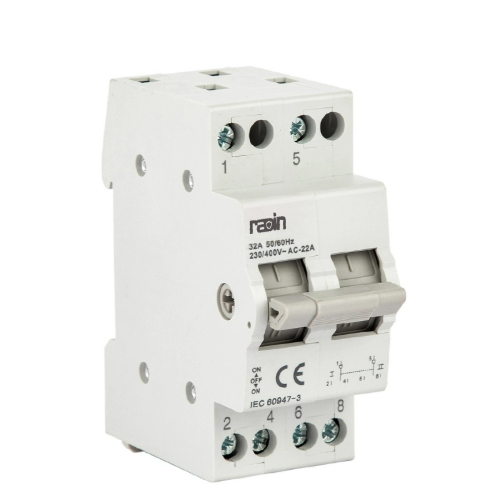
Many facilities deploy towable commercial generators during extended utility outages. A Manual transfer switch for generator setup streamlines this logistical challenge perfectly. You can install standard Cam-Lok receptacles alongside the switch enclosure. This configuration allows rapid, secure connection of rental generator fleets. Maintenance teams plug in the generator quickly. They verify the output voltage. Finally, they throw the switch to restore power across multiple facility nodes.
National Electrical Code (NEC) Article 702 covers optional standby systems. Power loss might halt production temporarily. However, it poses no immediate safety threat to personnel. Examples include bulk warehousing or certain agricultural processing plants. Immediate product spoilage is rarely a concern here. Using manual isolation keeps upfront capital costs remarkably low. It fulfills operational resilience mandates effectively. You maintain power flexibility without over-engineering the facility.
Edge sites face extreme environmental conditions daily. Deep mining operations and exposed agricultural facilities destroy delicate electronic equipment. Microprocessors frequently fail due to severe temperature swings. Airborne particulates coat circuit boards and cause short circuits. Deploying manual equipment ensures power continuity despite these hazards. These rugged enclosures withstand intense physical abuse. They keep critical water pumps or ventilation fans running smoothly when automated systems would simply fault out.
Plant managers often need to isolate specific plant sectors safely. Sub-panel manual switches provide excellent localized control. Maintenance crews can drop power to a single heavy machine line rapidly. They do not have to drop the entire facility grid. This targeted approach improves safety during routine maintenance procedures. It isolates electrical hazards locally. The rest of the manufacturing floor continues operating without interruption.
You must match the switch directly to your industrial power standards. Most commercial environments utilize heavy machinery requiring a Manual transfer switch 3 phase system. Evaluate the voltage rating carefully before purchasing. Typical ratings include 208V, 480V, or 600V. Single-phase equipment simply cannot support these heavy motor loads. Proper phase alignment prevents catastrophic phase-loss damage. It protects expensive motors from burning out completely.
Calculate continuous versus non-continuous loads accurately. Continuous loads run steadily for three hours or more. You must size the switch enclosure properly. It must handle 100% of non-continuous loads plus 125% of continuous loads. Undersizing leads to dangerous overheating and eventual failure. Implement a strict load-shedding protocol. Operators must know exactly which non-essential circuits to disconnect before transferring power.
Select the correct housing to protect internal components. A robust framework dictates this vital selection process. Reference the chart below for standard environmental ratings.
NEMA Rating | Environment Type | Protection Level Overview |
|---|---|---|
NEMA 1 | Indoor Standard | Protects against falling dirt and accidental contact with solid objects. |
NEMA 3R | Outdoor Exposed | Resistant to rain, sleet, and snow damage. Prevents ice formation issues. |
NEMA 4X | Corrosive Washdown | Watertight, dust-tight, and highly corrosion-resistant for harsh chemical areas. |
Understand the critical difference between standard transition modes. There are two primary types used in industry.
Open Transition: This mode utilizes a "break-before-make" sequence. Power is completely disconnected from the primary source before connecting the alternate source.
Closed Transition: This mode uses a "make-before-break" sequence. It overlaps both power sources briefly to prevent any power interruption.
Manual applications almost exclusively rely on Open Transition mechanisms. This physical break absolutely prevents dangerous backfeeding into the utility grid. It physically protects utility workers repairing external power lines.
Strict adherence to NEC guidelines is absolutely mandatory. Grounding and neutral switching require careful, deliberate attention. Determine if you need a 3-pole or 4-pole switch. A 4-pole switch switches the neutral conductor actively. This action prevents nuisance tripping of ground-fault relays. It is crucial when switching between separately derived power sources. Compliance protects your facility from severe liability.
Installers face common pitfalls during initial deployment. Proper Manual transfer switch wiring demands precision. Improper lug torqueing causes excessive heat and eventual thermal failure. Ensure adequate wire bending space inside the metal enclosure. Rigid industrial cables require substantial room to bend safely. You must also account for voltage drop over long wire runs. Oversize the conductors if the generator sits far from the main panel.
Installation must integrate seamlessly with existing safety rules. Follow Lockout/Tagout (LOTO) protocols strictly. OSHA requirements exist to protect operators during the physical throw. You must install physical padlocks on the switch mechanism. This prevents unauthorized personnel from transferring power unexpectedly. It ensures maximum safety while downstream maintenance occurs.
Mechanical systems require routine, scheduled exercising. Establish a baseline recommendation for contact inspection. Dust and grime increase electrical resistance significantly. Operate the mechanical handle monthly to prevent internal seizing. Inspect internal contacts for pitting or arc-flash damage annually. A well-maintained mechanism ensures smooth operation. It guarantees safety during actual power emergencies.
Use a strict criteria list for shortlisting potential equipment. A UL 1008 listing is mandatory for guaranteed safety. Assess the warranty length offered by the manufacturer. Verify the immediate availability of replacement parts. Mechanical contacts and handles wear out over time. You need a vendor who supplies spare parts quickly. This minimizes operational downtime.
Assess your facility personnel carefully. Does the facility have qualified onsite personnel available 24/7? Someone must physically execute the switch during a sudden outage. If nobody is present, operational delays negate any equipment cost savings. Ensure your team can respond rapidly. Train multiple shifts on proper deployment procedures.
Initiate a comprehensive site load study immediately. Identify peak amperage draws and continuous mechanical loads. Consult with a certified commercial electrical contractor prior to procurement. They will verify your internal load calculations. They also confirm absolute NEC compliance. Create a detailed deployment schedule based on these expert assessments.
A manual transfer system represents a robust, rugged, and financially viable solution. It excels when human oversight is preferred over pure automation. Prioritize exact technical specifications above all else. Phase, amperage, and NEMA ratings dictate safe operation. Never sacrifice safety or compliance for upfront cost savings. Take action today to secure your power resilience. Schedule an electrical infrastructure audit immediately. Define your precise load requirements before committing to a specific make and model. Train your personnel on proper switching procedures. Build a resilient infrastructure capable of weathering unexpected power loss safely.
A: Generally, no. They have vastly different structural designs. Upgrading usually requires a full replacement unless you purchase a specifically designed convertible modular unit. Manual enclosures lack the required wiring harnesses, logic controllers, and motorized mechanisms needed for automated operation.
A: You must match or exceed the highest amperage output of the main breaker. Alternatively, match it to the generator's maximum continuous rating. Calculate total continuous and non-continuous loads accurately to prevent undersizing and potential overheating.
A: Loose lug connections are the primary culprit, causing dangerous thermal failure. Improper neutral bonding is another frequent issue, leading to ground faults. Finally, water ingress in non-compliant or incorrectly specified enclosures destroys internal contacts.
A: Typically, no. NEC Article 700 defines life safety systems, which strictly require automatic transfer. Manual systems are designated under Article 702 for optional standby systems, where power loss does not pose an immediate threat to human life.